

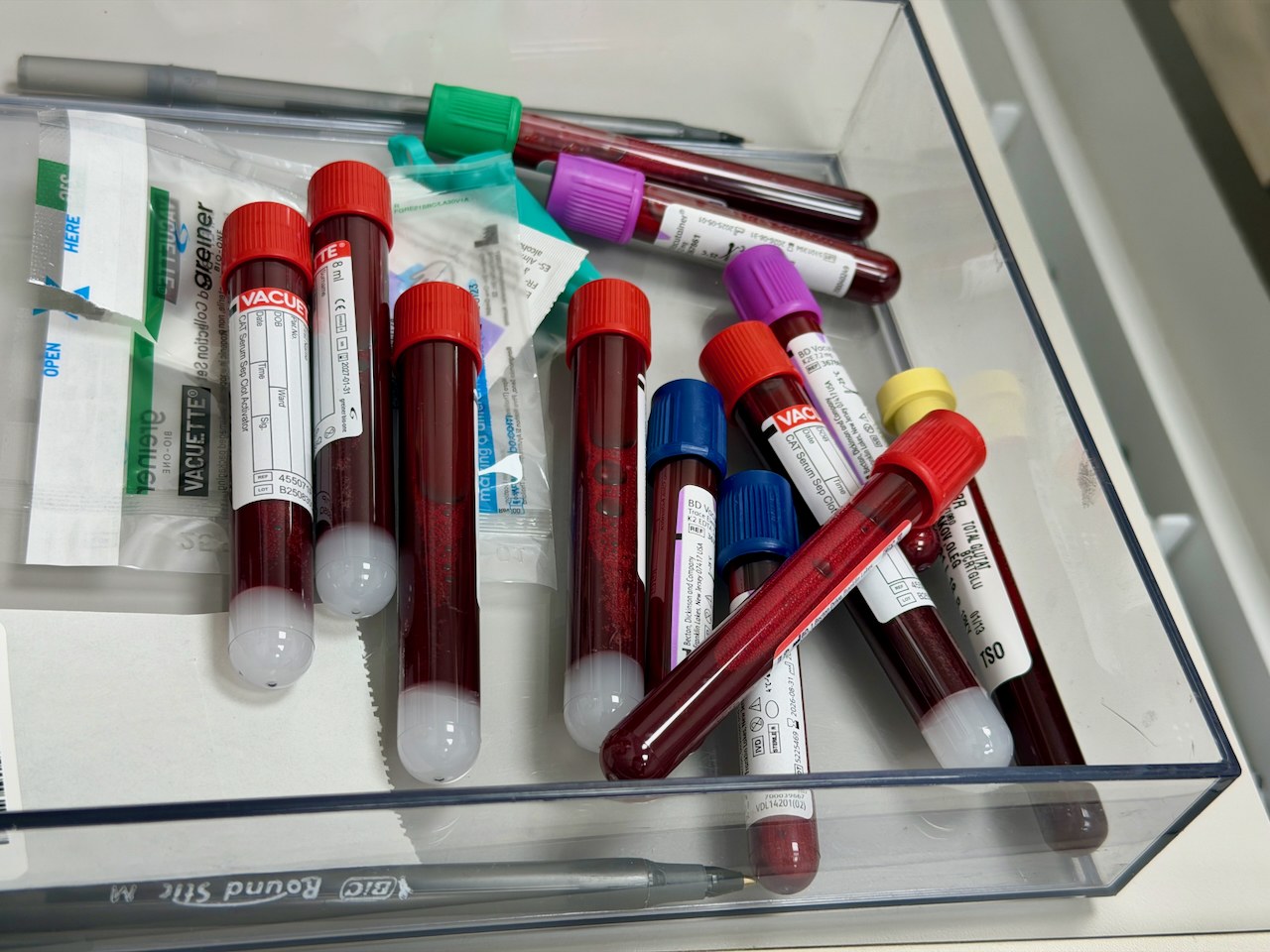
The cruellest feature of Crohn’s disease and ulcerative colitis is the wait. Symptoms creep in — pain, exhaustion, digestive chaos that comes and goes — and diagnosis often arrives years late, after damage to the bowel has quietly accumulated. Now researchers say the body may be leaving evidence far earlier than anyone assumed: a simple blood test, they report, can detect signals of these inflammatory bowel diseases up to ten years before a formal diagnosis, opening a window in which earlier monitoring and treatment could change the course of the illness.
The work sits within a fast-moving field of biomarker research catalogued by the Crohn’s & Colitis Foundation, which has long argued that the future of inflammatory bowel disease care is earlier, more personalised intervention rather than stronger reactions to late-stage disease.
What the Test Is Actually Measuring
The blood carries more than cells and nutrients; it carries a running commentary on the immune system. In people destined to develop Crohn’s or colitis, researchers found, proteins and immune markers associated with inflammation and gut-barrier dysfunction begin shifting years before symptoms force a doctor’s visit. The test reads that pattern — not a single magic molecule, but a signature — and calculates risk the way cardiovascular medicine already reads cholesterol and blood pressure together.
That distinction matters. A signature-based test can be tuned, validated and improved as more data arrives, and it can be run on the kind of blood sample already drawn at an ordinary check-up. No endoscopy, no specialist referral, no waiting until the disease announces itself destructively. The barrier between “we could have known” and “we knew” turns out to be, in large part, a blood vial.
Why Ten Years Changes the Conversation
A decade of warning transforms what medicine can offer. Patients flagged as high-risk could be monitored with simple, regular checks, so that when inflammation does ignite, treatment begins in weeks rather than years. Early treatment is the single strongest predictor of better outcomes in inflammatory bowel disease: drugs work best before the bowel wall is scarred, strictured or surgically shortened. Some researchers go further, asking whether the pre-disease phase is itself treatable — whether diet, microbiome-directed therapies or gentle immune modulation could delay or even prevent onset in the highest-risk group.
It would also end the diagnostic odyssey that patients describe with bitterness: the years of being told symptoms are stress, diet or irritable bowel, while a progressive disease advances unmeasured. A blood result does not argue. For conditions whose sufferers skew young — Crohn’s commonly strikes teenagers and people in their twenties — a decade’s head start is not a statistic. It is a different life trajectory, planned with knowledge instead of ambushed by crisis.
The Necessary Cautions
Screening tests live or die on their false positives, and a responsible account must say so. A signature that flags risk will inevitably flag some people who never develop disease, and telling a healthy twenty-year-old they carry a warning for a serious illness carries psychological and insurance consequences that medicine must handle carefully. The findings need replication in larger, more diverse populations, and regulators will want prospective trials showing that acting on the test actually improves outcomes, not merely predicts them.
There is also the question of what a positive result obliges anyone to do before symptoms exist. The likely first use is narrower and safer: enriching monitoring for people already at elevated risk, such as those with a strong family history, and giving gastroenterologists an objective trigger for earlier investigation when vague symptoms appear. Journals such as Nature have tracked this biomarker race closely because the same approach — reading disease in blood years early — is being pursued across cancer, dementia and autoimmune conditions simultaneously.
What Happens Next
The path from a published signature to a clinic runs through validation cohorts, standardised assays and cost-effectiveness arguments that health systems will scrutinise. None of that diminishes the conceptual shift. Crohn’s and colitis have always been diseases that smoulder before they burn; medicine is finally learning to smell the smoke.
For the roughly one in a hundred people who will develop these conditions, the prospect of learning it from a routine blood test — early, calmly, with time to plan — is a profound change in the story their illness gets to tell. Read more health research in our coverage and on the Techdemis homepage.
