

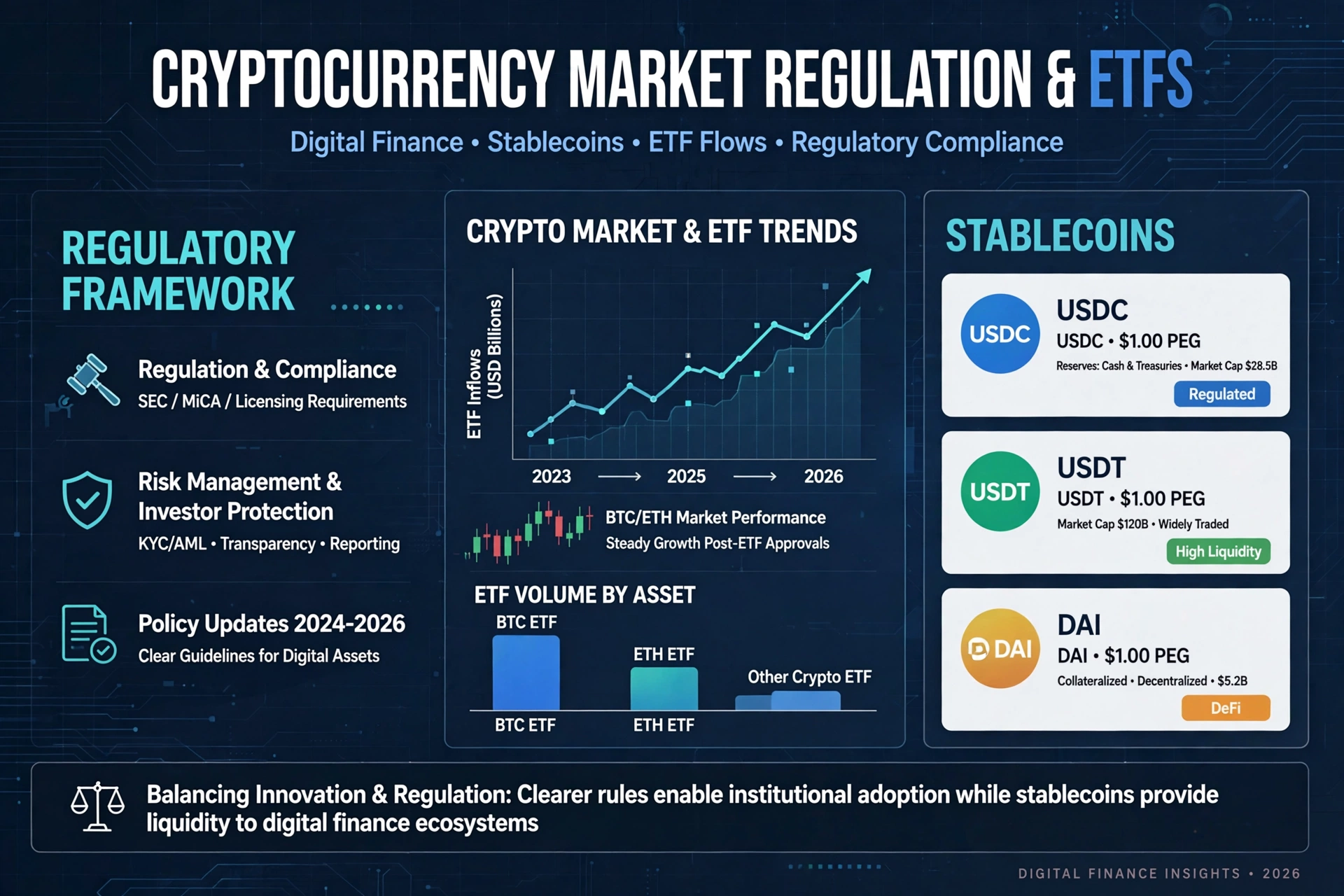
Crypto markets in 2026 look different from the boom-and-bust cycles that defined their first decade. Clearer regulation, regulated exchange-traded products and the growing role of stablecoins have brought digital assets closer to mainstream finance. That does not make them simple or safe. It does mean the conversation has shifted from whether crypto will be regulated to how, and from who can access it to what risks remain when far more people can.
Clearer Rules in Major Markets
Regulation has been the biggest structural change. In the United States, stablecoin legislation through the GENIUS Act set a framework for dollar-pegged tokens, while regulators approved spot Bitcoin and Ethereum exchange-traded funds that operate under familiar market rules. In Europe, the Markets in Crypto-Assets framework, known as MiCA, has brought more consistent licensing and compliance requirements across member states. Licensing regimes in places such as Hong Kong and Singapore point in a similar direction.
Coverage of Coinbase research on ETFs, stablecoins and adoption in 2026 reflects how analysts now link those policy changes to operational readiness: firms can build products, custody arrangements and compliance systems with less uncertainty about what is permitted. Clearer rules do not remove disagreement — tax treatment, decentralised finance and cross-border enforcement remain contested — but they reduce the legal guesswork that kept many institutions on the sidelines.
ETFs and Institutional Products
What ETFs Changed
Spot crypto ETFs gave pension funds, advisers and retail investors a way to gain exposure through brokerage accounts without holding private keys or using a crypto exchange directly. That convenience explains much of their growth. It also changes market behaviour: flows into and out of large funds can influence prices, and crypto exposure is increasingly discussed alongside equities, bonds and commodities in portfolio meetings.
Beyond Bitcoin
Institutional products have widened beyond a single asset. Tokenised funds, tokenised Treasuries and funds that accept stablecoin subscriptions show how traditional asset managers are experimenting with blockchain rails for settlement and cash management. Tokenisation — representing a real-world asset as a digital token — is moving from pilot projects towards use as collateral and in delivery-versus-payment systems, where it can reduce settlement delays.
These developments should not be read as an endorsement of any product. An ETF or tokenised fund still carries the volatility and specific risks of its underlying assets, plus fees and counterparty considerations that investors need to understand from the official product documents.
Read also on TechDemis: A Guide for Competitor Analysis: Learning from Backlinks and Search Visibility
Read also on TechDemis: Exploring the Modern World of Online Games and Digital Entertainment
Stablecoins Become Infrastructure
Stablecoins, digital tokens designed to track currencies such as the US dollar, are now used for trading, cross-border payments and settlement between financial systems. Their appeal is speed and availability outside banking hours. Their importance also makes their design critical: what reserves back the token, how those reserves are audited, and what happens if an issuer faces stress are questions regulators are increasingly asking.
When stablecoins are well reserved and transparently managed, they can function as useful payment infrastructure. When they are not, problems can spread quickly because so many other services depend on them. That is why reserve rules, redemption rights and supervision have become central to new laws.
The Risks That Remain
Volatility has not disappeared. Crypto assets can fall sharply in hours, driven by leverage, thin liquidity in some markets, macroeconomic news or a failure at a major platform. Fraud and market manipulation remain concerns, particularly outside regulated venues. Technology risks persist too, from smart contract bugs and exchange hacks to mistakes in self-custody that cannot be reversed.
Regulatory risk also cuts both ways. Rules can tighten, products can be restricted in some countries, and tax obligations vary widely. Anyone considering exposure needs to check the rules in their own jurisdiction and understand that past performance and growing institutional interest are not guarantees of future returns. This article is general information only and is not financial advice.
What Comes Next
The likely path for the rest of 2026 is consolidation rather than a single dramatic moment: more ETF applications and faster approval processes, stablecoins taking a larger role in payments and settlement, tokenised collateral gaining acceptance, and regulators testing how their new frameworks work in practice. Markets will still react to interest rates, geopolitics and technology failures as well as crypto-specific news.
Crypto in 2026 is therefore best understood as a maturing, still-risky part of the financial system — more regulated, more institutional and more connected to traditional markets than before, but not immune to the speculation and sharp losses that have marked its history.
