

Continuous glucose monitors have transformed care for many people who use insulin, giving them a live view of their blood sugar instead of a handful of finger-prick readings each day. A major new clinical trial now suggests the same technology can help a much larger group: adults with type 2 diabetes who do not use insulin at all.
The study, described as the largest clinical trial of its kind and published in the New England Journal of Medicine, found that participants using a continuous glucose monitor spent approximately five more hours a day in their target blood sugar range compared with those receiving usual care. Five hours is a substantial difference, because time spent in range is closely linked to energy, concentration and the long-term risk of complications.
How the Trial Worked
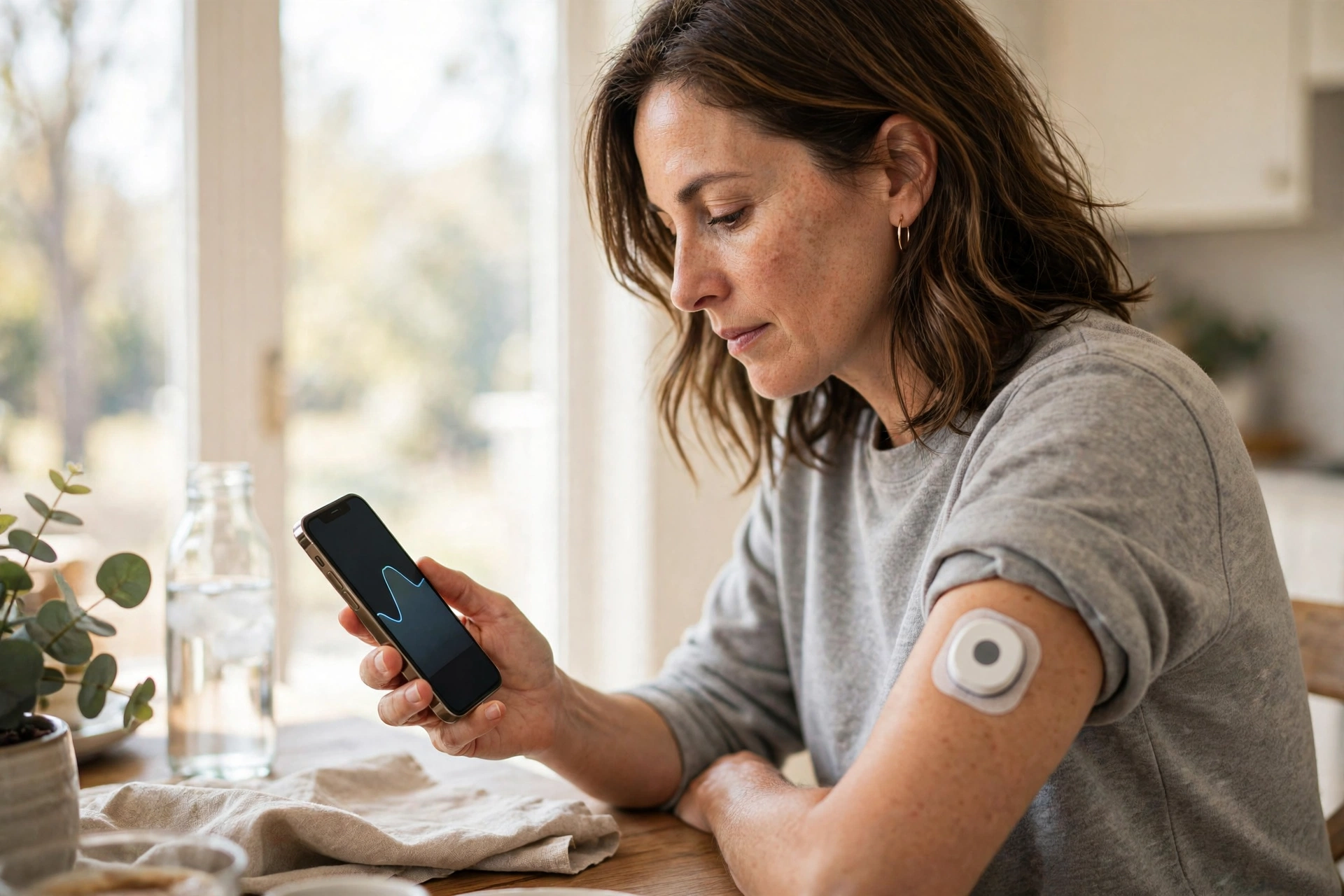
Continuous glucose monitors, often shortened to CGMs, use a small sensor worn on the arm or abdomen to measure glucose in the fluid between cells every few minutes. The readings are sent to a phone or receiver, complete with trend arrows showing whether levels are rising, falling or steady. Instead of reacting after a high or low reading, users can see the effect of a meal, a walk or a poor night of sleep as it happens.
Adults with type 2 diabetes who were not using insulin have historically been offered monitors far less often, partly because insurers and health systems questioned whether the benefit justified the cost without insulin doses to adjust. This trial was designed to answer that question directly, comparing monitor use with standard management over a meaningful period rather than a few weeks.
Researchers at the University of Colorado Anschutz, whose summary of the findings is available from CU Anschutz News, report that the improvement came alongside better overall glucose control, without requiring participants to start insulin.
Why Five More Hours in Range Matters
Blood sugar that stays high for long periods damages blood vessels and nerves over time, raising the risk of heart disease, kidney problems, vision loss and foot complications. Sharp swings carry their own burden, leaving people tired, irritable and unable to concentrate. Spending more of the day in a healthy range is therefore not just a nicer chart on an app; clinicians treat time in range as a practical summary of daily risk.
The behavioural effect may be just as important as the sensor itself. When people can see, within an hour, exactly what a particular breakfast does to their glucose, abstract dietary advice becomes personal evidence. Many users describe making smaller, sustainable changes: a shorter walk after lunch, a different order of foods at dinner, or swapping one snack that reliably causes a spike. Those are the kinds of adjustments that are difficult to learn from a single blood test every three months.
This is also an example of a wider shift in medicine, where continuous data replaces occasional snapshots. Similar thinking is changing screening and diagnosis in other fields, as our coverage of how new technology is reshaping everyday work and services illustrates in a different setting.
Who Could Benefit, and What Are the Limits?
Type 2 diabetes affects hundreds of millions of adults worldwide, and only a minority use insulin. If monitors help even a fraction of that wider group keep glucose steadier, the cumulative effect on complications and health care costs could be large. Advocates argue the devices can also identify people whose control is deteriorating early, before medication needs to escalate.
There are real limits to consider. Sensors cost money and need replacing every one to two weeks, depending on the model. Not everyone wants a device attached to their body, and a constant stream of numbers can cause anxiety for some users. Accuracy can be affected by certain medicines and by compression of the sensor during sleep, so monitors support, rather than replace, clinical advice and confirmatory testing when readings and symptoms disagree.
Access is the other major question. Trials can show that a technology works, but health systems and insurers decide who receives it. If coverage remains limited to people using insulin, the group this study focused on may still struggle to obtain a monitor outside a research setting.
What Patients Should Do Now
Anyone with type 2 diabetes who is curious about a monitor should discuss it with their care team, particularly if their latest HbA1c result was above target or their readings vary widely. A trial period of a few weeks can be informative even before committing long term, because the patterns it reveals, such as overnight trends or post-meal spikes, can guide food, activity and medication decisions.
The headline finding is encouraging because it points to benefit without adding insulin or another drug. A wearable sensor, paired with the feedback it provides, helped people spend about five more hours each day in a healthier range. For a condition managed in thousands of small daily decisions, that kind of clear, immediate feedback may be exactly what makes the difference.

1 Comment
Pingback: Laundry Appliance Support From LG Washer Repair Round Rock TX Experts - Tech Demis