

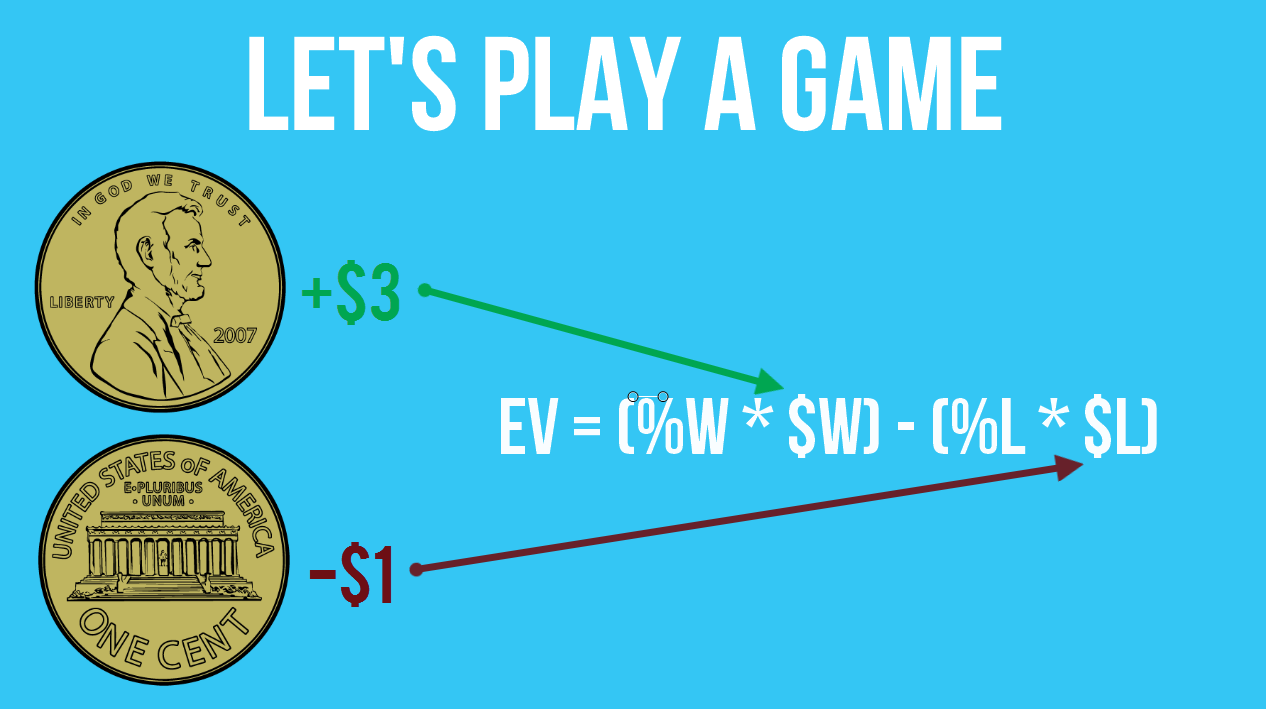
Expected Value (EV) is one of the most important analytical tools in the world of betting, statistics, and probability-based decision-making. It represents the average outcome a bettor can expect over the long run when placing the same type of wager repeatedly. While betting is often associated with luck and unpredictable outcomes, EV offers a structured way to bring mathematical reasoning into gambling decisions. Understanding EV helps bettors evaluate whether a wager is worth taking, how likely it is to produce profit, and whether the available odds truly reflect the value of a betting opportunity.
EV becomes even more critical in modern online betting environments where odds fluctuate rapidly, promotions influence bettor behavior, and a huge variety of betting markets can create confusion for newcomers. Instead of relying solely on intuition, bettors who understand EV can make data-driven decisions that provide clarity and reduce unnecessary risks. By exploring how EV works, why it matters, and how it can be applied across different betting scenarios, players can transform their betting approach from guesswork to strategy.
Understanding the Concept of Expected Value (EV)
Expected Value can be best understood as the average result of a repeated action. In betting, it reflects how much a player can expect to win or lose for every unit wagered over a long sequence of identical bets. If the EV is positive, it suggests that the bet has a theoretical advantage for the bettor. On the other hand, a negative EV implies that the wager is unfavorable in the long run.
In practical terms, EV allows bettors to evaluate the true worth of odds offered by bookmakers. For example, even if a bet seems attractive based on team performance or personal intuition, the actual value of the bet ultimately depends on the probability of the outcome and the return offered. Because bookmakers adjust odds according to market conditions and built-in margins, many bets naturally have negative EV. However, certain opportunities—especially mispriced odds—can result in positive EV for discerning bettors.
Understanding EV as a concept sets the foundation for deeper analysis and helps bettors differentiate between emotional choices and mathematically justified wagers.
The Mathematics Behind Expected Value
The mathematical structure behind EV is relatively straightforward yet powerful. To calculate EV, bettors need only two components: the probability of an outcome occurring and the potential payout associated with that outcome. The calculation incorporates both winning and losing scenarios, resulting in a numerical value that reflects the long-term expectancy of a bet.
Because EV relies on measurable variables such as probability and payout, it brings objectivity into betting decisions. Whether a bettor is analyzing a football match, a basketball moneyline, or even casino game probabilities, the underlying mathematics remains consistent. By mastering the formula, bettors gain a tool that helps them systematically evaluate different markets and opportunities.
The Formula for Expected Value Explained
To calculate EV, bettors follow a simple step-by-step structure:
- Identify the probability of the event occurring.
- Multiply that probability by the amount you would win if the event occurs.
- Identify the probability of the event not occurring.
- Multiply that probability by the amount you would lose if the event does not occur.
- Subtract the expected loss from the expected gain.
The final result represents the EV. A positive result indicates a profitable bet over time, while a negative result suggests long-term loss. This format provides clarity across sports betting markets since odds can be converted into implied probabilities, allowing bettors to plug accurate values into the equation.
Applying EV to Sports Betting Scenarios
EV becomes especially useful when applied to real sports betting situations. Sports events contain uncertainties that bettors constantly try to evaluate—team performance indicators, injuries, historical matchups, home advantage, and more. EV synthesizes these factors through numerical probabilities, making the decision-making process more grounded.
By understanding how EV works with odds, bettors can analyze whether a bookmaker has undervalued a particular outcome. For example, if a bettor believes a team has a 40% chance of winning but the odds imply only a 30% chance, that wager may hold positive EV. This method allows bettors to challenge market assumptions and find strategic opportunities across leagues and sports.
Example: Calculating EV for a Football Match Bet
Imagine a bettor evaluating a football match where Team A is priced at odds of 2.50 (implied probability 40%). The bettor believes Team A has a 50% chance of winning based on independent analysis. If the bettor places a $100 wager:
- Probability win = 50%
- Payout if win = $150 profit
- Probability lose = 50%
- Loss amount = $100
EV = (0.50 × 150) − (0.50 × 100)
EV = 75 − 50
EV = +25
A +25 EV means the bettor can expect to gain $25 on average for every $100 wagered over the long term. This example demonstrates how EV highlights value opportunities beyond simple intuition.
Benefits of Using Expected Value in Betting
Applying EV to betting decisions carries several important advantages. First, it encourages discipline by promoting data-driven choices rather than emotional impulses. Bettors can evaluate wagers through a structured framework, identifying positive-value opportunities accurately. Second, EV supports bankroll management by helping bettors avoid long-term unprofitable bets. Third, habitual EV analysis improves strategic consistency, enabling bettors to focus on quality rather than volume.
Another powerful benefit is that EV helps bettors identify inefficiencies in betting markets. Sports markets occasionally misprice outcomes, especially when public sentiment heavily influences odds. EV calculations help bettors spot these rare but valuable opportunities, potentially improving long-term profitability.
Common Mistakes When Calculating EV
Despite its usefulness, many bettors make errors when calculating EV. One common mistake is misinterpreting or miscalculating probabilities. Bettors often overestimate team strength or underestimate external factors such as injuries or weather conditions. This leads to faulty EV calculations, producing misleading results.
Another mistake is ignoring bookmaker margins. Bookmakers build profit margins into odds, meaning that raw odds do not always reflect true probabilities. Without adjusting for margins, EV calculations can become skewed. Additionally, bettors sometimes focus too heavily on a single calculation rather than analyzing multiple wagers over time. Since EV reflects long-term expectations, evaluating only one bet does not provide a complete picture.
By identifying these mistakes, bettors can refine their analytical process and ensure more accurate and reliable EV calculations.
How to Improve Accuracy in EV Calculations
To enhance EV accuracy, bettors need to combine statistical analysis with grounded decision-making. One effective technique is using multiple data sources—team statistics, predictive models, bookmaker odds history, and expert commentary—to form realistic probability estimates. The more precise the probability input, the more reliable the EV calculation becomes.
Another method involves adjusting probabilities based on dynamic match conditions. For example, live betting markets change rapidly as in-game events unfold. Bettors who adapt probability estimates according to match context can maintain accuracy even in fast-changing situations.
Bettors can also improve EV analysis by recording past calculations to identify patterns or recurring errors. With consistent evaluation, they can refine assumptions over time and gradually improve predictive accuracy.
Advanced Applications of Expected Value
Beyond simple bet evaluations, EV has advanced applications in predictive analytics and bankroll management. Professional bettors often use EV to guide how much they should wager on a particular match. This approach aligns with mathematical frameworks such as the Kelly Criterion, which uses probability-based assessments to determine optimal betting amounts.
EV also integrates seamlessly with machine learning models. Sports analytics platforms use EV-based evaluations to predict long-term outcomes, simulate seasons, and identify market inefficiencies. Psychological factors also intersect with EV analysis since bettors must remain disciplined and avoid impulsive decisions that contradict their analytical models.
Through these advanced applications, EV becomes more than a calculation—it’s a comprehensive framework for strategic betting.
The Role of Expected Value in Long-Term Betting Success
Long-term betting success hinges on consistent value-based decisions. Even when individual bets lose, consistently choosing positive EV wagers can lead to profitability over thousands of iterations. This is why professional bettors focus on systematized decision-making rather than emotional reactions to wins or losses.
EV also helps shape responsible betting habits. Instead of chasing big wins or relying on luck, bettors can approach wagering with the mindset of an investor—prioritizing long-term advantage over short-term excitement. By evaluating every bet with EV analysis, players gain a clearer understanding of risk and reward.
Related Football and Entertainment Insights
Expected Value connects naturally with broader football analytics and online betting strategies. Fans interested in enhancing their statistical understanding of football wagering can explore more analytical tools, match insights, and sports markets through platforms that offer extensive football coverage. For readers who wish to deepen their sports and entertainment journey, they can visit ufabet to access football content, betting markets, and a range of full entertainment options designed to complement analytical approaches like EV.
This comprehensive understanding of Expected Value provides a foundation for smarter, more strategic betting—one that blends mathematics, discipline, and practical insight to elevate the betting experience.
