

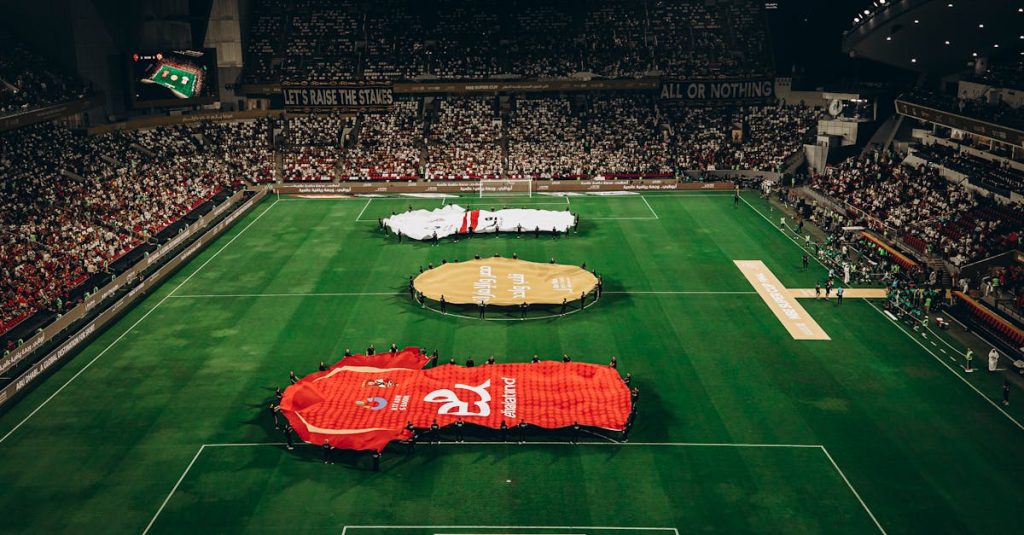
Before a World Cup ball is kicked, millions of small private rituals are already underway: silent prayers, repeated playlists, specific seats, and shirts that “cannot be washed until we lose.” None of these actions change pressing schemes or xG, but they transform how fans step into a live match, turning personal belief into a shared emotional language that cuts across religions and cultures.
Why Rituals Matter Before a Ball Is Kicked
Pre‑kickoff rituals give structure to uncertainty. A World Cup match compresses years of preparation into ninety minutes where one decision or deflection can shift an entire campaign, and most fans have no control over what happens on the pitch. Rituals—whether religious or superstitious—offer a way to feel involved in that uncertainty rather than simply waiting for it.
By repeating the same actions before each game, supporters create their own version of a “game model” for emotions. Just as coaches rely on familiar patterns to stabilise players under pressure, fans rely on familiar routines to stabilise themselves. The opening whistle then feels like the start of a story they have helped set up, not just something happening to them.
How Different Beliefs Produce Similar Matchday Patterns
On the surface, pre‑match rituals look very different from one part of the world to another: a whispered Christian prayer in a living room, a Muslim fan timing viewing around daily prayers, a Buddhist supporter arranging small offerings near the TV, or a secular fan insisting that everyone sit in the same order on the sofa.
Look closer, and the patterns converge. Each practice combines three elements: a moment of focus before the game, an appeal to something larger than individual control, and a promise—explicit or not—that repeating the ritual keeps a thread of continuity between matches. When the game starts, fans who followed their routine often report feeling “more ready,” more locked into each pass and press because they have already marked this match as different from an ordinary evening.
Watching Live When the Ritual Has “Worked” or “Failed”
The impact of these rituals is clearest during full ดูบอลสด rather than quick highlight packages. When a team plays well after a familiar pre‑match routine, fans naturally interpret each positive sequence—controlled build‑up, strong pressing, clear chance creation—as proof that they approached the game “the right way.” If things go badly, the same patterns can be read as signs that something in the ritual broke: the shirt was washed, the timing was off, somebody changed seats. Over time, these stories link the emotional memory of specific matches to specific habits. That link quietly alters how fans watch future games from the opening minute: they are not only tracking tactics, they are checking whether the feeling generated by their ritual matches what they see in the team’s body language, composure, and intensity.
A Simple Sequence for Seeing How Rituals Shape Live Viewing
If you want to understand how these beliefs affect your own match experience, it helps to follow a small internal sequence from pre‑kickoff to full‑time. This turns vague superstition into something you can observe in yourself while you follow the football.
A practical sequence might be:
- Before the match, notice which actions you feel you “have to” do—what you wear, where you sit, what you say or avoid saying—and how you feel once they are complete.
- In the first 10–15 minutes, pay attention to whether you interpret normal events—good passes, minor mistakes—as unusually significant because they seem to confirm or challenge your ritual.
- Around half‑time, ask whether your mood matches the team’s performance on the pitch or is more tied to whether your pre‑match expectations are being met.
- Late in the game, observe whether you cling to the ritual—refusing to move, speak, or change channel—when the result is close, as if any small change could “break” the outcome.
- After full‑time, separate your emotional story (“we lost because I broke the routine”) from on‑pitch causes like pressing, chance quality, and substitutions, and see how each contributed to how you felt.
Working through this sequence over several matches shows that while rituals do not decide results, they strongly shape the lens through which you experience each pressing wave, counter‑attack, and tactical adjustment.
Common Ritual Types and What They Do for Fans
Matchday habits can be grouped into a few broad types, each offering a different kind of psychological support. Seeing them side by side clarifies why people from different religions and cultures often recognise themselves in one another’s routines.
| Ritual Type | Typical Example | What It Gives the Fan During the Match |
| Religious prayer | Praying alone or with family before kick-off | Sense of calm, shared hope, moral framing of result |
| Clothing/symbol objects | “Lucky” shirts, scarves, flags, accessories | Feeling of continuity and personal contribution |
| Spatial routines | Same seat, same room setup, same viewing group | Anchor in space, sense of protective order |
| Verbal rules | Phrases to say or avoid, silence at set pieces | Illusion of control over key moments |
| Group rituals | Chants, songs, countdowns before kick-off | Shared rhythm, stronger emotional synchrony |
Across religions and cultures, fans often move between these categories. Someone may combine a formal prayer with an informal rule about not changing channel or not checking messages during penalties. The exact content varies; the underlying desire—to feel both connected and slightly in control of something uncontrollable—remains constant.
How Shared Rituals Make Tactical Conversations Easier Across Faiths
One of the quiet strengths of global pre‑match rituals is that they turn difference into an entry point rather than a barrier. A fan talking about going to a place of worship before a big game and a fan talking about “never missing the anthem with my friends” are describing structurally similar experiences: a repeated act that marks the transition from ordinary time to match time.
Once that shared structure is recognised, it becomes easier to move into conversations about what happens on the pitch. Fans who begin by comparing lucky shirts or prayers often end up comparing how they read pressing intensity, defensive compactness, or finishing composure. The ritual becomes a bridge: “We prepare differently, but we watch the same patterns of space, movement, and decision once the match starts.”
When Rituals Help—and When They Can Distort How We Read Games
Rituals usually help by providing emotional stability. A fan who feels grounded before kick‑off may be better able to notice tactical details—pressing triggers, changes in shape, or shifts in tempo—because their anxiety is organised by the routine. They can ride momentum swings without feeling completely swept away.
But there is a risk when rituals become the primary explanation for every result. If a defeat is always blamed on “breaking the routine,” it is easy to miss more concrete patterns: repeated struggles against high presses, predictable attacking routes, or poor chance quality despite high possession. Over a full tournament, this can flatten understanding; every game becomes another test of superstition instead of another lesson in how the team actually plays.
Using Rituals to Deepen, Not Replace, Match Understanding
The most constructive way to approach pre‑kickoff rituals is to see them as emotional scaffolding rather than ดูบอลออนไลน์ฟรี changy analysis. Let them give you a sense of readiness and connection, then deliberately switch your focus to what you can observe: where a team builds, how they press, how their xG compares to the chances you remember seeing.
Across a World Cup, this approach allows you to keep your beliefs and routines without losing sight of cause and effect on the pitch. Wins and losses become both stories of faith and stories of structure. You can say “we did everything we could” in your living room while also recognising that, for example, your team’s deep block worked well against one opponent but left them unable to create high‑quality chances against another.
Summary
Pre‑kickoff rituals turn World Cup viewing into something more than passive consumption, giving fans from different religions and cultures a shared way to face the same ninety minutes of uncertainty. These habits do not change pressing schemes or shot maps, but they profoundly shape how people feel and what they notice once the game begins. When used as a foundation rather than a substitute for watching closely, they can coexist with tactical insight—helping supporters connect across beliefs while still reading the football in front of them with clear, curious eyes.
